Business Name: BeeHive Homes of Collierville
Address: 1368 Wolf River Blvd, Collierville, TN 38017
Phone: (901) 286-3455
BeeHive Homes of Collierville
At BeeHive Homes of Collierville, Tennessee, we offer the finest assisted living and memory care experience available in a cozy, comfortable homelike 21 bedroom setting. Each of our residents has their own spacious room with an ADA approved bathroom and shower. We prepare and serve delicious home-cooked meals three times a day every day. We maintain a small, friendly elderly care community. We provide regular activities that our residents find fun and contribute to their health and well-being. Our staff is attentive and caring and provides assistance with daily activities to our senior living residents in a loving and respectful manner. We invite you to tour and experience our assisted living home and feel the difference.
1368 Wolf River Blvd, Collierville, TN 38017
Business Hours
Monday thru Sunday: Open 24 hours
Facebook: https://www.facebook.com/BeeHiveCollierville
Instagram: https://www.instagram.com/beehivecollierville/
Families typically arrive at the idea of memory care during a season of stress. A loved one with dementia is wandering at night, missing out on medications, or becoming hazardous in the kitchen area. Everyone is tired, fretted, and uncertain whether assisted living, memory care, respite care, or generating more home assistance is the best move.
What numerous households do not understand initially is that memory care is not one uniform model. There are big, resort-style senior care campuses with lots of homeowners on each flooring. There are locked dementia care systems inside assisted living communities. Then there are little residential memory care homes, sometimes accredited as residential care centers, board-and-care homes, or respite care care cottages, with 6 to 16 residents living together in a house-like setting.
Those smaller neighborhoods can look deceptively easy from the outside: a single-story home on a quiet street, a small sign, perhaps a garden. Inside, nevertheless, the design of care can feel very different, and the benefits typically only become clear as soon as you have actually seen both large and small settings side by side.
This article draws on years of dealing with families, exploring hundreds of communities, and watching homeowners with time. The objective is not to claim that little is constantly better. It is to highlight the benefits that tend to be concealed until you understand what to search for, and to assist you weigh them versus the realities and compromises of each option.
What "little residential memory care" actually means
Terminology in senior care can be complicated. On paper, a little residential memory care neighborhood might be accredited under the same umbrella as assisted living, but its structure and everyday rhythm are distinct.
Instead of a big structure with long corridors, elevators, and dining-room that seat 60 people, a little residential home normally has:
A single front door, often with a keypad for safety, that seems like going into a private home.
A living room, dining area, and cooking area that look and operate like a home, not an institution. Private or semi-private bed rooms, often with homeowners encouraged to bring their own furniture. A little backyard or patio area that personnel can monitor easily.Staffing patterns show the smaller scale. Rather than a rotating cast of lots of caregivers, there might be a steady team of caretakers, a house supervisor, and visiting nurses or therapists. The caregivers cook, help with bathing and dressing, cue medications, and lead basic activities. The lines in between "care" and "every day life" blur, which can be an enormous benefit for individuals with dementia.
Small memory care homes can be stand-alone operations or part of a larger senior care business. Some specialize solely in dementia care. Others serve seniors with combined requirements, such as Parkinson's disease, stroke healing, and basic frailty, while still offering structured dementia care.
Understanding this setting assists describe why specific advantages emerge more quickly here than in bigger, more official assisted living buildings.
Emotional safety and the scale of the environment
One of the most underestimated stress factors for a person living with dementia is sheer ecological intricacy. High ceilings, long corridors, a constant flow of individuals, televisions blaring, announcements over a speaker system, and large group activities can overwhelm somebody who currently has a hard time to process sensory input.
In little residential memory care, the environment is normally quieter and slower. Residents move between a handful of familiar areas. The kitchen smells like soup or coffee, not like a commercial food service operation. Staff voices are easier to recognize. Even the sightlines are simpler: from many seats you can see the front door, the cooking area, and the backyard.
For someone with moderate dementia, that smaller stage often lowers stress and anxiety. I have actually seen homeowners who were pacing and "trying to go home" in a big memory care system become calmer within a week of moving into a little residential home. They still have dementia. They still have moments of confusion. The distinction is that the environment no longer bombards them with signals they can not sort.
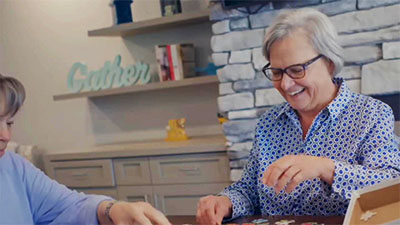
Families sometimes worry that a smaller setting will feel claustrophobic. In practice, the reverse is normally real. Individuals with cognitive problems tend to feel more in control when they can see and understand their surroundings. Fewer doors, fewer choices, and fewer complete strangers can imply more emotional safety.
Consistency of relationships
Large assisted living and memory care neighborhoods can do lots of things well, specifically when it concerns amenities, therapy offerings, or on-site medical services. However, they have problem with one basic truth: the more personnel you require to cover a 100-bed building, the more turnover and rotation you will have.
In little residential memory care, staffing ratios and consistency are two of the most effective hidden advantages.
Families observe it first in easy information. A caregiver in a 10-bed home understands that Mr. S likes his eggs over medium and will not touch oatmeal, that he needs a suggestion to call his daughter after lunch on Wednesdays, which he ends up being restless if the blinds are closed too early at night. These are not products in a care plan binder, they are part of the day-to-day material of life.
Over time, this consistency becomes therapeutic. Dementia care depends greatly on nonverbal interaction. Individuals read intonation, facial expression, and touch. When team member are familiar, residents unwind faster throughout individual care, accept help more readily after a fall, and react better to redirection when they are upset.
Families benefit too. In a small home, it prevails to see the same 3 or four caregivers over months or years. You learn their names, they learn your household characteristics, and trust develops. When you contact us to ask how the night went, the person addressing typically understands because they were there. That continuity is more difficult to accomplish in a big facility where day, night, night, and weekend shifts might all have various teams.
This is not to say small homes never have turnover or staffing challenges, particularly in a tight labor market. However when the resident-to-caregiver ratio stays lower and the team is purposefully kept little, the relationships that form can be deeper and more stable.
Subtle customization that really matters
Marketing products for both big and small service providers frequently highlight "individualized care strategies." The expression is so common that families tune it out. What identifies a great small residential memory care neighborhood is not that a care strategy exists, however how deeply it influences day-to-day life.
Consider meals. In a large memory care system, the cooking area prepares a menu for dozens of homeowners. Unique diets are accommodated, however practical limits exist. In a little home, staff usually cook in the family cooking area. They may notice that 3 homeowners who grew up on farms consume better when breakfast looks like what they keep in mind from youth: bacon, eggs, toast, coffee. Or that a resident with advanced dementia will just drink fluids if they are served in the same red mug he recognizes.
Those adaptations are tiny, yet they make the distinction between a resident reducing weight and keeping it, in between persistent dehydration and steady health.
The exact same sort of subtlety appears in everyday regimens. Some people with dementia wake early and settle finest if they shower before breakfast. Others are groggy in the morning and fight bathing till mid-afternoon. In a home with 8 or 12 residents, caregivers can normally bend schedules without tossing an entire building off rhythm. It is just easier to say, "We will do Mrs. L's shower after her favorite television program, not in the past."
Personalization likewise shows up in what is not forced. Residents who hate large-group bingo or sing-alongs often withdraw in bigger neighborhoods, where activity calendars skew towards events developed for 20 people. In a little home, engagement can be quieter and more personalized. Folding towels next to the caretaker who is doing laundry, chopping soft vegetables with a safe knife, watering the garden, or "helping" set the table can all be framed as meaningful participation, not childish busywork.
When done well, this subtle customizing honors the adult identity of the person. That dignity is simple to guarantee; it is much harder to deliver without the versatility that a small setting provides.
Reduced hospitalizations and crises
Families seldom inquire about hospitalization rates on trips, but they should. Repetitive health center stays can speed up cognitive decline, disrupt sleep and mobility, and sap whatever reserves a frail senior still has.
Small residential memory care neighborhoods can not always provide on-site nursing 24/7, specifically in states where policies identify them from skilled nursing facilities. Yet many of them still handle to prevent preventable emergency clinic journeys through attention and timing.
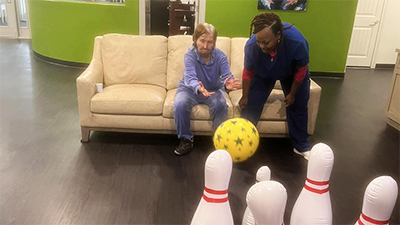
Caregivers who see the same 8 to 12 residents every day establish a fine-grained sense of standard. They discover when Mr. T is walking a bit slower, when Mrs. G's hunger drops for the 2nd day in a row, or when an usually talkative resident ends up being uncommonly quiet. In dementia care, those subtle shifts often signal early infection, dehydration, discomfort, or medication side effects.
Because lines of interaction are shorter, a caretaker can tell the house manager at breakfast, who calls the nurse practitioner, who squeezes in a same-day visit. A urinary system infection gets treated in your home, with oral antibiotics and increased fluids, instead of progressing to delirium, a fall, and a 2 a.m. ER visit.
This is not a guarantee. Severe events still occur. There are times when a health center visit is definitely suitable. But the mix of closer observation, quicker reaction, and realistic danger tolerance typically leads to less disruptive emergency situations compared to more institutional settings where small modifications can be more difficult to spot.
The function of respite care in a little setting
Not every family is prepared to dedicate to long-lasting positioning. Some are looking after a parent in the house, balancing work and caregiving, and simply need a break. Others are not sure how their loved one will endure a relocation, or they wish to "test" a neighborhood before signing a long-term agreement.
Respite care stays in small residential memory care homes can serve several purposes at once.
Caregivers in the house get a possibility to rest, take a spouse on a long-postponed trip, or recuperate from their own medical procedures without the constant caution that dementia care needs. Knowing that your loved one remains in a small home, not an enormous building, can ease the guilt numerous caregivers bring when they step away.
For the person with dementia, a short stay provides a chance to adjust gradually. Two weeks in a little home with the exact same faces, the very same kitchen, and a foreseeable routine feels less like being "sent away" and more like dealing with extended family. If an irreversible relocation later becomes essential, the environment is already familiar.
From a practical perspective, respite remains permit families to evaluate the quality of a home beyond the polished tour. Does staff treat locals with patience at 7 a.m. On a Monday, not just during the set up visit? Does your home odor like real food cooking, or air freshener covering up odors? Are homeowners engaged, or do they spend most of the day in front of a television?
Many of the most satisfied households I have actually worked with began their relationship with a little memory care home through a respite care stay that exposed those concealed strengths.
Safety without a prison feel
Wandering and exit seeking are among the top factors households think about devoted memory care. Large structures often react with layers of security: badge-locked systems, coded doors, and alarms whenever someone attempts to leave not being watched. The security is real, but the experience can feel clinical.
Small residential memory care homes usually have less entry and exit points to manage. One protected front door, often one side gate to a completely fenced backyard, and a number of internal doors that can be alarmed. Instead of requiring to keep an eye on 3 floors and numerous elevators, personnel can keep visual and acoustic awareness of a compact space.
This permits a safety posture that feels more like residing in a monitored home than in a locked ward. Residents who tend to wander can stroll laps between the living-room and cooking area, or around the lawn, while personnel keep casual watch. Doors can remain closed but not looming, and security hardware can be low profile.
There are constantly compromises. In a really small home, if two residents need one-to-one attention at the same time, the group may have to focus on or employ backup, which is not always immediately offered. That is why it is essential to ask how the home handles homeowners with extremely high roaming or behavioral needs, and what takes place if your loved one's danger profile changes.
Still, for numerous families, the mix of security and homelike ambiance is among the greatest arguments for a little residential model.
How little homes deal with medical complexity
A typical worry is that small residential memory care can not manage complex medical needs. The truth varies by state regulations and by specific supplier, but some patterns are worth understanding.
Most small homes are created for "assisted living level" care, not the full medical strength of a skilled nursing facility. They handle chronic conditions such as diabetes, cardiac arrest, and COPD, administer routine medications, coordinate home health services, and offer hands-on aid with all activities of everyday living.
The hidden benefit is frequently in the coordination, not the raw medical horse power. When a resident requirements physical therapy after a fall, the therapist comes to the home and works one on one in familiar surroundings. When a hospice or palliative care service provider becomes involved, their nurses see the resident in the same bedroom they sleep in every night, with caretakers close by who can enhance the care plan.
Of course, there are limits. Homeowners on ventilators, those requiring frequent IV medications, or those with extremely unsteady medical conditions usually belong in higher-acuity settings. An excellent small memory care provider will be honest about these limits instead of trying to stretch beyond them.
Families ought to also recognize that a smaller home does not always indicate weaker scientific oversight. Some of the best operators use a dedicated nurse who visits each home regularly, keeps track of weight patterns, skin integrity, and medication programs, and trains caregivers in dementia-specific methods. The scale of the home can actually make this kind of proactive nursing more effective.
Social material and everyday life
Many big communities highlight their activity calendars: live music, trips, fitness classes, religious services. These can be valuable, specifically for residents who still delight in bigger social settings. However the quieter daily social life in a little residential home frequently fits people with moderate to innovative dementia better.
Instead of occasions, think of rhythms. A normal day in a small memory care home might consist of:
- Morning coffee around the kitchen table while caregivers prep breakfast. Soft music or a preferred TV program, with one resident helping fold laundry and another pacing a bit, looked at gently. A simple group activity like chair workouts, a short devotional, or browsing old magazines together. Lunch served household design at a single table, with caretakers sitting down to help instead of guaranteeing food carts. Afternoon naps, private strolls in the garden, phone calls with household. Evening regimens, one resident at a time, with unhurried assistance to get ready for bed.
Because the exact same individuals share these routines day after day, small bonds form. A resident with limited language may always sit next to the same next-door neighbor at meals. Another might light up when a specific caretaker comes on shift. These are not orchestrated "programs," however they are no less powerful for it.
Families in some cases stress that their loved one will be "bored" in a small house without a packed activity schedule. In practice, lots of homeowners feel less pressure to carry out and more flexibility to move at their own pace. For people whose brains are already working overtime to analyze truth, that gentler social material can be a relief.
Who tends to thrive in a small residential memory care home
No single setting works for everyone with dementia. In my experience, the small residential model is especially well suited to a couple of common profiles.
- People who become overwhelmed by noise and crowds, or who have a history of stress and anxiety, often calm down in a smaller, more foreseeable area. Individuals who matured in close-knit families or towns and are comforted by domestic regimens like cooking, gardening, and familiar home jobs tend to engage more. Seniors who have actually had negative experiences in institutional environments, such as long hospital stays, might accept care quicker when it seems like signing up with a household instead of going into a facility. People with moderate dementia who still stroll individually, but who are at risk of roaming or falls in the house, succeed where staff can unobtrusively monitor them in a compact setting. Caregivers who stay deeply included and visit typically may find a little home provides more significant ways to participate, from sharing meals to decorating a bedroom.
On the other hand, someone who is highly extroverted, who still delights in large-group games, concerts, or campus-style environments, may choose a bigger memory care neighborhood with robust shows. Likewise, an individual with exceptionally complex medical requirements may require the higher level of on-site nursing found in a proficient nursing facility.
Matching character, disease stage, family involvement, and medical intricacy to the right environment is more important than any single feature.
Questions to ask when touring a little memory care home
When you visit a little residential neighborhood, the discussion matters as much as the design. A couple of targeted questions can expose how the home truly operates.
- How many caretakers are on task throughout the day, evening, and night, and what is the optimal variety of residents when completely occupied? Can you stroll me through a normal day for somebody at my loved one's phase of dementia, including how you manage personal care and activities? How do you handle citizens who wander, end up being agitated, or refuse care, and at what point would you say this setting is no longer proper? Who coordinates medical care, how often does a nurse visit, and how do you manage urgent modifications in condition? What is your method to involving households, both in visits and in care planning?
Pay attention not only to the responses, however to how staff respond. Do they speak concretely, sharing examples, or do they count on vague peace of minds? Do caregivers on the floor appear engaged with residents, or are they clustered around a staffing station? Does the environment feel like a place you might think of spending a full afternoon, not just a 30-minute tour?
Balancing expense, place, and quality
Cost inevitably goes into the discussion. Small residential memory care can be comparable in rate to bigger assisted living and memory care neighborhoods, more inexpensive in some markets, and more costly in others, particularly where single-family homes are valuable.
Because these homes are smaller sized, they also exist in less numbers. Your perfect setting might be an hour's drive away, while a bigger center sits ten minutes from your home. Long-term, that distance impacts how often you realistically visit, how rapidly you can respond in an emergency, and how connected you feel to the care team.
When weighing these factors, think about not only regular monthly costs however likewise hidden expenses. A slightly lower rate at a big community that frequently sends out homeowners to the healthcare facility, charges extra for lots of services, or experiences high turnover might not be a deal in time. Conversely, a higher sticker price at a small home that prevents hospitalizations, consists of most services in the base rate, and retains personnel for many years might show more sustainable mentally and financially.
Ask for a detailed breakdown of what is included, what sets off higher levels of care and associated charges, and how frequently rates have actually increased in the previous five years. Transparency here is a helpful proxy for how the company operates in other domains.
Bringing all of it together for your family
Choosing a memory care setting is seldom about finding perfection. It has to do with discovering the best fit given your loved one's requirements, your family's capability, and the alternatives in your area.
Small residential memory care neighborhoods are worthy of a major appearance because numerous of their strengths are not right away obvious in a sales brochure. Psychological security produced by scale, deep relationships between citizens and caretakers, true day-to-day customization, lowered crises, a homelike method to security, and a calmer social material are all easier to attain when the whole "neighborhood" fits under one roof.

At the very same time, small is not automatically much better. Some homes are poorly run or under-resourced. Some can not handle very complex habits or medical conditions. Some are simply not located where your household can reasonably stay involved.
The most trusted way to reveal those hidden benefits is to see them in action. Tour more than one type of setting: a large memory care system inside a senior living campus, a standalone assisted living with a dementia care wing, and at least one small residential home. Invest calm time there. Listen to your own body's response as much as your mind's analysis.
If you find yourself breathing out when you enter a cottage, watching personnel relocation calmly among a handful of residents who appear known and at ease, take note. That sense of relief is frequently the very first sign that you have actually discovered among those concealed benefits that can make the next chapter of your loved one's life safer, gentler, and more human.
BeeHive Homes of Collierville provides assisted living care
BeeHive Homes of Collierville provides memory care services
BeeHive Homes of Collierville provides respite care services
BeeHive Homes of Collierville supports assistance with bathing and grooming
BeeHive Homes of Collierville offers private bedrooms with private bathrooms
BeeHive Homes of Collierville provides medication monitoring and documentation
BeeHive Homes of Collierville serves dietitian-approved meals
BeeHive Homes of Collierville provides housekeeping services
BeeHive Homes of Collierville provides laundry services
BeeHive Homes of Collierville offers community dining and social engagement activities
BeeHive Homes of Collierville features life enrichment activities
BeeHive Homes of Collierville supports personal care assistance during meals and daily routines
BeeHive Homes of Collierville promotes frequent physical and mental exercise opportunities
BeeHive Homes of Collierville provides a home-like residential environment
BeeHive Homes of Collierville creates customized care plans as residents’ needs change
BeeHive Homes of Collierville assesses individual resident care needs
BeeHive Homes of Collierville accepts private pay and long-term care insurance
BeeHive Homes of Collierville assists qualified veterans with Aid and Attendance benefits
BeeHive Homes of Collierville encourages meaningful resident-to-staff relationships
BeeHive Homes of Collierville delivers compassionate, attentive senior care focused on dignity and comfort
BeeHive Homes of Collierville has a phone number of (901) 286-3455
BeeHive Homes of Collierville has an address of 1368 Wolf River Blvd, Collierville, TN 38017
BeeHive Homes of Collierville has a website https://beehivehomes.com/locations/collierville/
BeeHive Homes of Collierville has Google Maps listing https://maps.app.goo.gl/F1PuQmWyGT6PTGmY6
BeeHive Homes of Collierville has Facebook page https://www.facebook.com/BeeHiveCollierville
BeeHive Homes of Collierville has Instagram page https://www.instagram.com/beehivecollierville/
BeeHive Homes of Collierville won Top Assisted Living Homes 2025
BeeHive Homes of Collierville earned Best Customer Service Award 2024
BeeHive Homes of Collierville placed 1st for New Mexico Senior Living Communities 2025
People Also Ask about BeeHive Homes of Collierville
What is BeeHive Homes of Collierville Living monthly room rate?
The rate depends on the level of care that is needed. We do an initial evaluation for each potential resident to determine the level of care needed. The monthly rate is based on this evaluation. There are no hidden costs or fees
Can residents stay in BeeHive Homes of Collierville until the end of their life?
Usually yes. There are exceptions, such as when there are safety issues with the resident, or they need 24 hour skilled nursing services
Do we have a nurse on staff?
Yes, we have a part-time nurse with an on-call nurse if needed for after hours. We also have a Med Tech on staff that can administer medications
What are BeeHive Homes of Collierville's visiting hours?
Visiting hours are adjusted to accommodate the families and the resident’s needs… just not too early or too late
Do we have couple’s rooms available?
Yes, each home has rooms designed to accommodate couples. Please ask about the availability of these rooms
Where is BeeHive Homes of Collierville located?
BeeHive Homes of Collierville is conveniently located at 1368 Wolf River Blvd, Collierville, TN 38017. You can easily find directions on Google Maps or call at (901) 286-3455 Monday through Sunday Open 24 hours
How can I contact BeeHive Homes of Collierville?
You can contact BeeHive Homes of Collierville by phone at: (901) 286-3455, visit their website at https://beehivehomes.com/locations/collierville/ or connect on social media via Facebook or Instagram
Take a drive to Firebirds Wood Fired Grill. Firebirds Wood Fired Grill offers a comfortable dining experience ideal for Assisted Living, Memory Care, Senior Care, Elderly Care, and Respite Care outings.